This material may not be published, broadcast, rewritten, or redistributed. ©2026 Twincitieslocalnews - local news, local sports
By Twincitieslocalnews staff
Published: September 10, 2026 9:15am
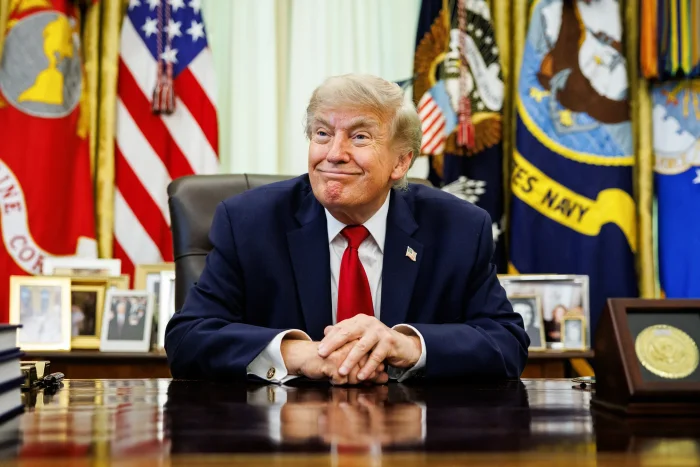
On a hot Wednesday in Dallas, under bright stage lights and a ceiling full of flags, Donald Trump stepped to the microphone and offered the crowd more than a speech. He offered a number.
If Republicans held the House and the Senate in the midterm elections, he said, every American adult would get $5,000.
For a second, the words seemed to hang in the air by themselves. Then the room broke open. Delegates clapped. Phones rose. People laughed in disbelief and then applauded harder, as if the force of their noise might turn the promise into fact. Trump gave it a name that sounded polished and simple: the Trump Dividend. He compared it to the way a successful company rewards its shareholders. He spoke of strength, success, and a country rich enough to send money back to its people.
In the hall, it worked exactly as intended. It changed the weather.
People who had come in tired sat up straighter. Party operatives began smiling into cameras. Supporters repeated the number to one another as if saying it twice made it more real. Five thousand dollars was not an abstraction. It was rent, car repairs, credit-card bills, medicine, a semester’s tuition payment, a little room to breathe.
But outside the bright theater of the convention, the promise hit colder air.
Within an hour, JD Vance seemed to narrow the idea, suggesting the money would not go to the wealthy. He floated tariff revenues as a possible way to pay for it. That only deepened the questions. Reporters asked for details. The White House did not answer. Budget experts began their arithmetic. Lawyers began their cautions. In Washington, where excitement rarely survives contact with numbers, the mood turned skeptical fast.
The cost, critics said, would likely run beyond 1.8 trillion, with the national debt above $40 trillion. And even before the math, there was the law. A president could not simply decide to mail money to the public. Congress would have to approve it or, at the very least, allow it to happen.
That was where the promise began to split in two.
In one America, it sounded bold, even thrilling: a leader refusing to play by the tired rules of midterm politics, trying to stop the usual slide of the president’s party and give voters a reason to believe they might gain something concrete. In the other America, it sounded reckless: a campaign-season miracle with no clear funding, no settled legal path, and no surplus behind the word dividend.
Trump, of course, pressed forward. He has long hated the old pattern of presidents losing ground in midterms, and he spoke in Dallas like a man trying to overturn not only an election map but the laws of gravity. Others around him rushed to help. Sen. Bernie Moreno promised to get a bill ready. Supporters treated the proposal as proof that the campaign still knew how to command attention. Opponents treated it as proof of something else entirely.
By night’s end, the hall had emptied. The applause was gone. The banners hung still. What remained was a promise large enough to dominate every conversation around it.
No checks had been written. No law had changed. No money had moved.
What Trump had created that day was not a dividend, not yet, but a test: of voter hunger, of political nerve, of whether spectacle could outrun math for one more election season. And when the lights went down in Dallas, the answer was already clear enough. The Trump Dividend was, for now, exactly what it had begun as: a campaign promise, glittering in public, but still waiting at the locked door of Congress, the deficit, and reality.